
Hearing Loss Treatment

Untreated Hearing Loss

A large number of people wait 15 years or more years before buying their first hearing aid, which is an extreme case of untreated hearing loss. During this time, their quality of life may have deteriorated unnecessarily. Our ears function for us to hear, but understanding happens in the brain. Over time as you lose your hearing, your brain slowly loses the ability to recognize sounds and certain words. This is why you can hear but sometimes misunderstand.

The National Council on the Aging (NCOA) reported that hearing loss in older persons can have a significant negative impact on quality of life. In the NCOA’s survey of 2,300 hearing-impaired adults, age 50 or older, those with untreated hearing loss were more likely to report depression, anxiety, and paranoia and less likely to participate in organized activities, compared to those who wore hearing aids. Studies have linked untreated hearing loss to:

Schedule an Appointment

Untreated Hearing Loss Can Affect You in the Workplace

Nearly 2 out of 3 people with hearing loss are below retirement age and are still working, yet less than 13% report they received a screening for hearing loss during their last physical exam.
Hearing loss prevents employees from fully engaging in meetings and conversation, which fuels anger, instability, and anxiety, while giving co-workers the impression that they’re less competent, says Sergei Kochkin, Executive Director of The Better Hearing Institute. Hearing loss also makes it difficult to hear over the phone and understand conversations with co-workers in a noisy environment.
If you are the spouse, child, or friend of someone with untreated hearing loss, you may think you’re helping them by repeating yourself, making extra effort to speak louder or more clearly, or by interpreting what others say. What you may not realize is that you’re unknowingly assisting in their failure to seek help. Many people with hearing loss don’t realize how much they’re actually missing because you have become their ears. However, it takes only a short time for them to realize that, without your help, they’re in trouble. Here are some simple steps you can take to help your friend or loved one get the help they need.

Untreated Hearing Loss and Your Personal Safety

According to the US Fire Administration, millions of hard of hearing Americans are unable to hear the warning sounds of a fire alarm. The Hearing Loss Association of America claims that people have died in a fire because they could not hear or wake up to fire alarms. Hearing loss also makes it difficult to hear important announcements, instructions, sirens, and traffic signals, which could put you and your loved ones in danger.
Hearing loss affects more than just the person with the hearing loss, but everyone around them. Others find it difficult to cope with your hearing needs; they have to repeat themselves, talk loudly, and use more signs and gestures while talking. A hearing loss is frustrating not only for you, but for those trying to communicate with you.

Things You Shouldn't Do

Things You Should Do

3 Types of Hearing Loss

What Are The Causes?
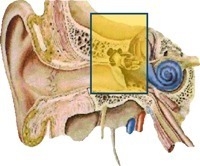
Conductive Hearing Loss Diagram

Conductive Hearing Loss

Conductive hearing loss is often temporary and can often be corrected. Conductive loss stems from problems of the outer or middle ear and can be caused by:
This type of hearing loss can be treated with wax removal, medicine, or surgery.
Sensorineaural Hearing Loss Diagram

Sensorineural Hearing Loss

Of the two, this one is the most common form when it comes to a loss of hearing. Out of all of the documented adult hearing issues, 90 percent of the cases fall into the sensorineural category. It is caused by the normal aging process as well as excessive exposure to noise. You can expect the following issues when dealing with a sensorineural loss.

Amplification created with hearing aids are a common form of treatment, but occasionally, surgery will be required. Discuss your options with one of our hearing care specialists to determine what action should be taken.

Mixed Hearing Loss

Both conductive and sensorineural losses occurring at the same time is also known as mixed hearing loss.

Many people suffer from a loss of hearing. Fortunately, if you are finding it hard to hear certain noises or have a hard time catching all of the words in a conversation, our hearing specialists can fit you with hearing aids that will bring back many of the sounds you have been missing out on.

Sometimes it helps to understand why you can’t hear as clearly as you used to. All forms of hearing loss can be placed into one of two categories. The three types of hearing loss are Conductive Hearing Loss, Sensorineural Hearing Loss/Nerve Deafness, and Mixed Hearing Loss. By determining which category your loss of hearing falls under, we will know best how to treat it.

Top Warning Signs of Hearing Loss

More than 5 percent of the population, or 466 million people, have disabling hearing loss, according to the World Health Organization. For most individuals, hearing loss occurs gradually and may not be highly apparent until the condition has progressed. By recognizing hearing loss warning signs early on, you can take the necessary steps to address your problem.
You’re Unable to Follow Conversations in Noisy Places
Trying to have a conversation with background noise like cars, talking, or music can be challenging when you have hearing loss. You may have trouble hearing, understanding, or following the words of others when they speak.
Do you frequently have trouble hearing common sounds in the home, such as the telephone ringing or the doorbell buzzing? Have you burned your food because you don’t hear the timer beeping? The inability to hear these types of sounds could indicate a loss of hearing.
Many people who have hearing loss will turn up the volume on the radio or TV to a high level to accommodate for their hearing loss. While you may not notice that the volume is excessively high, your friends and loved ones may mention it.
The natural aging process causes the cochlea, the organ inside your ear that helps you hear, to start to fail. During the initial stages of hearing loss, voices may start to sound unclear or muffled. High-pitched voices, such as those from women and children, may be more difficult to hear.
Some hearing loss warning signs are more subtle and you might not realize that there is a problem at first. For example, you may frequently say “what?” when someone is talking to you or you may have difficultly hearing all of the words during a conversation.
Beltone Doctor Treating Client

Treatment for Hearing Loss

Hearing loss impacts individuals of all ages. If you are struggling with hearing loss, hearing aids may be useful in restoring your hearing. Schedule an appointment with Beltone at our Dallas Fort Worth locations to see how our staff can help you.